

EP7. Raphaël
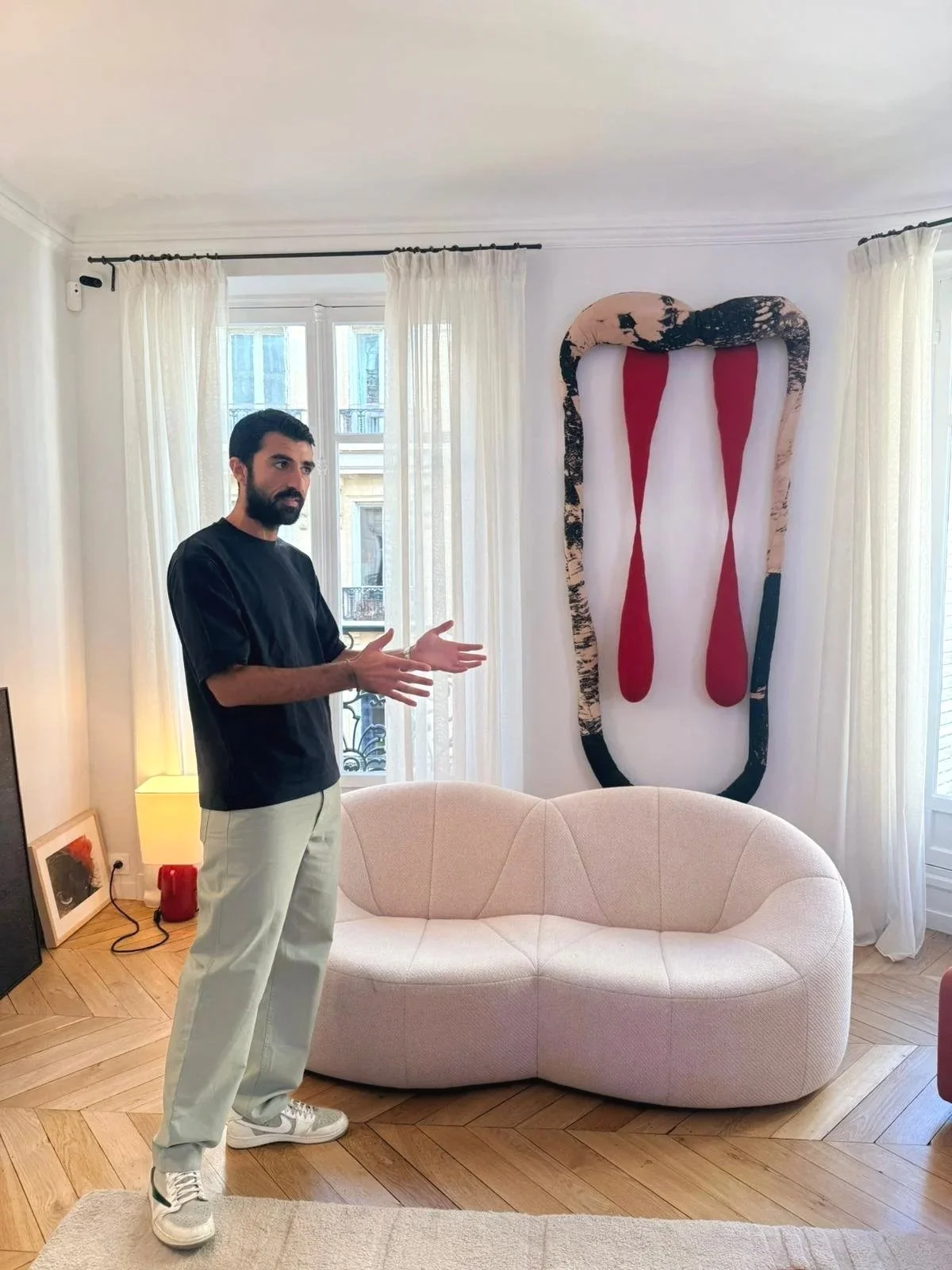
Raphaël with his collection Vampire Mouth 101 (2013) by Sterling Ruby
After a decade in finance, was there a single turning point that made you walk away and commit fully to the art world?
There wasn’t a single dramatic breaking point, but rather a gradual realization. Finance gave me structure, discipline, and analytical tools, but collecting gave me something finance never did: emotion, curiosity, and human connection. Over time, art, collectibles, and the ecosystem around them took up more and more mental space. Eventually, it became clear that this wasn’t just a passion on the side — it was where my energy, time, and instincts naturally belonged.
Your fascination with distorted portraits is well known. Why do you find beauty in distortion rather than in perfection?
Distortion creates an escape from reality. In a world that’s already stressful and hyper-rational, I’m not looking for perfection or idealized beauty on my walls. Distorted faces allow me to step into the artist’s mind, into something more emotional, intuitive, and sometimes uncomfortable. That tension is exactly what makes them powerful to live with on a daily basis. I'm a huge fan of fantasy and sci fi movies, which makes me even more attracted to this style.
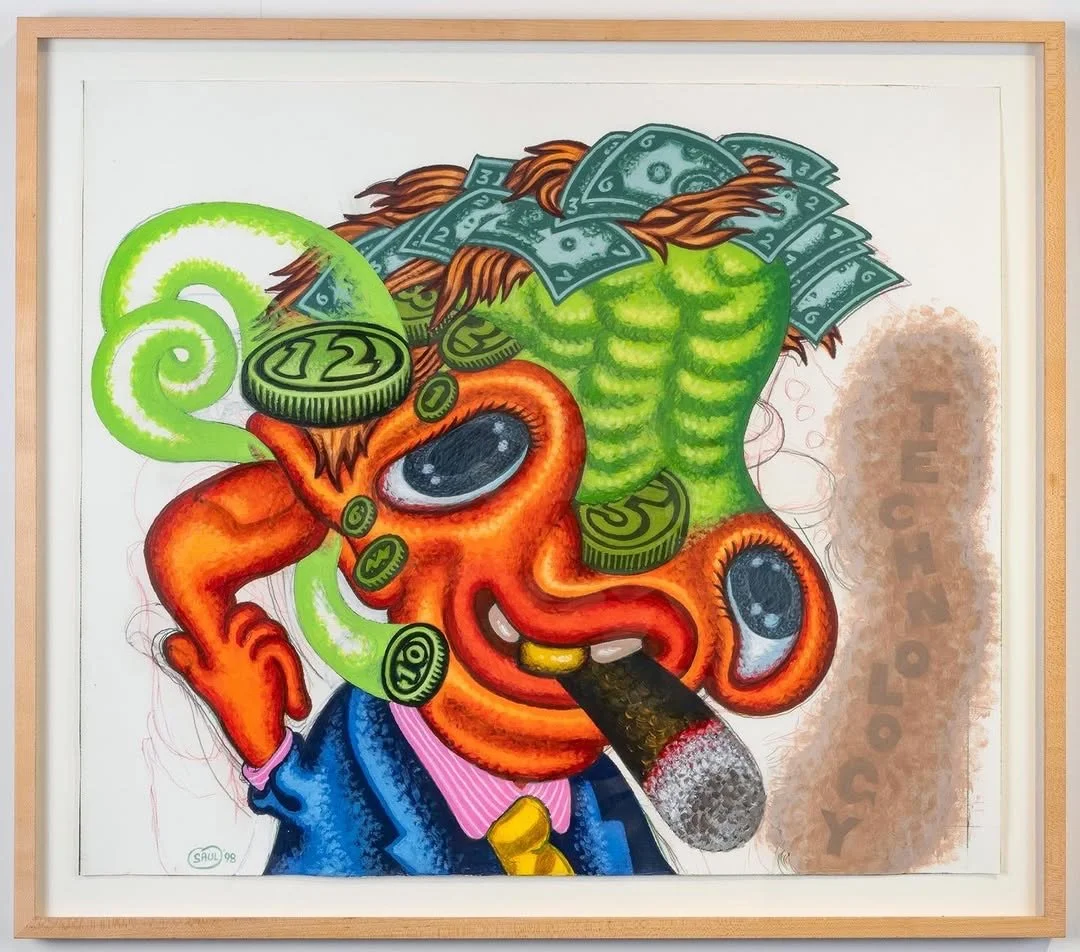
Technology (1998) by Peter Saul
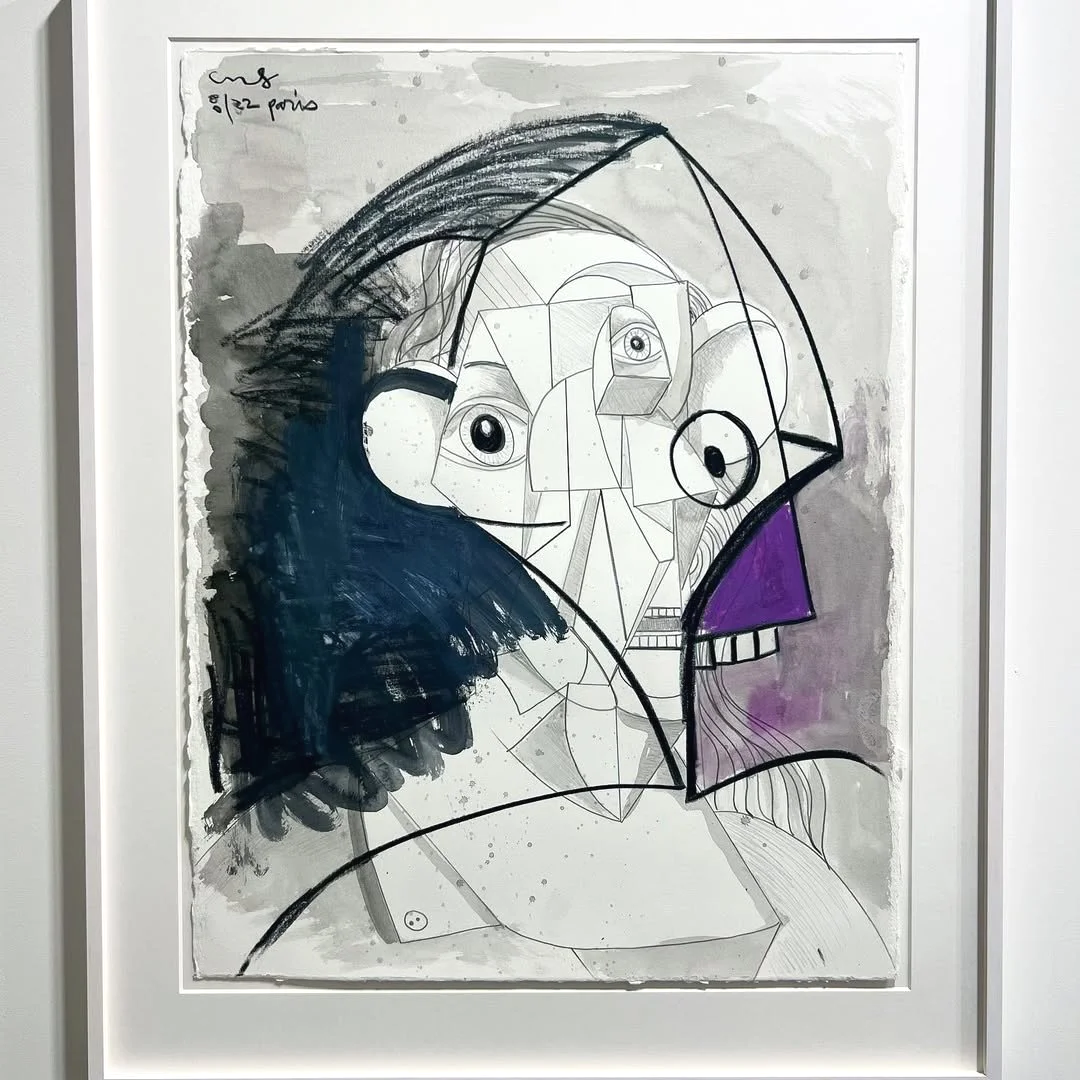
Triangular Head Composition (2022) by George Condo
Which recently collected artwork feels most personal to you right now — and why does it resonate so strongly?
Tracey Emin’s Trust Yourself remains deeply personal to me. The phrase is something I come back to constantly, especially during moments of doubt. I see it almost every morning, and it functions both as a reminder and a form of emotional grounding. It’s intimate, direct, and honest — qualities I’m increasingly drawn to as a collector. I could also underline the Lee Ufan work on paper I got from SBI auction, those undetermined lines remind me of my life : a desire to be aligned but ends up really misaligned
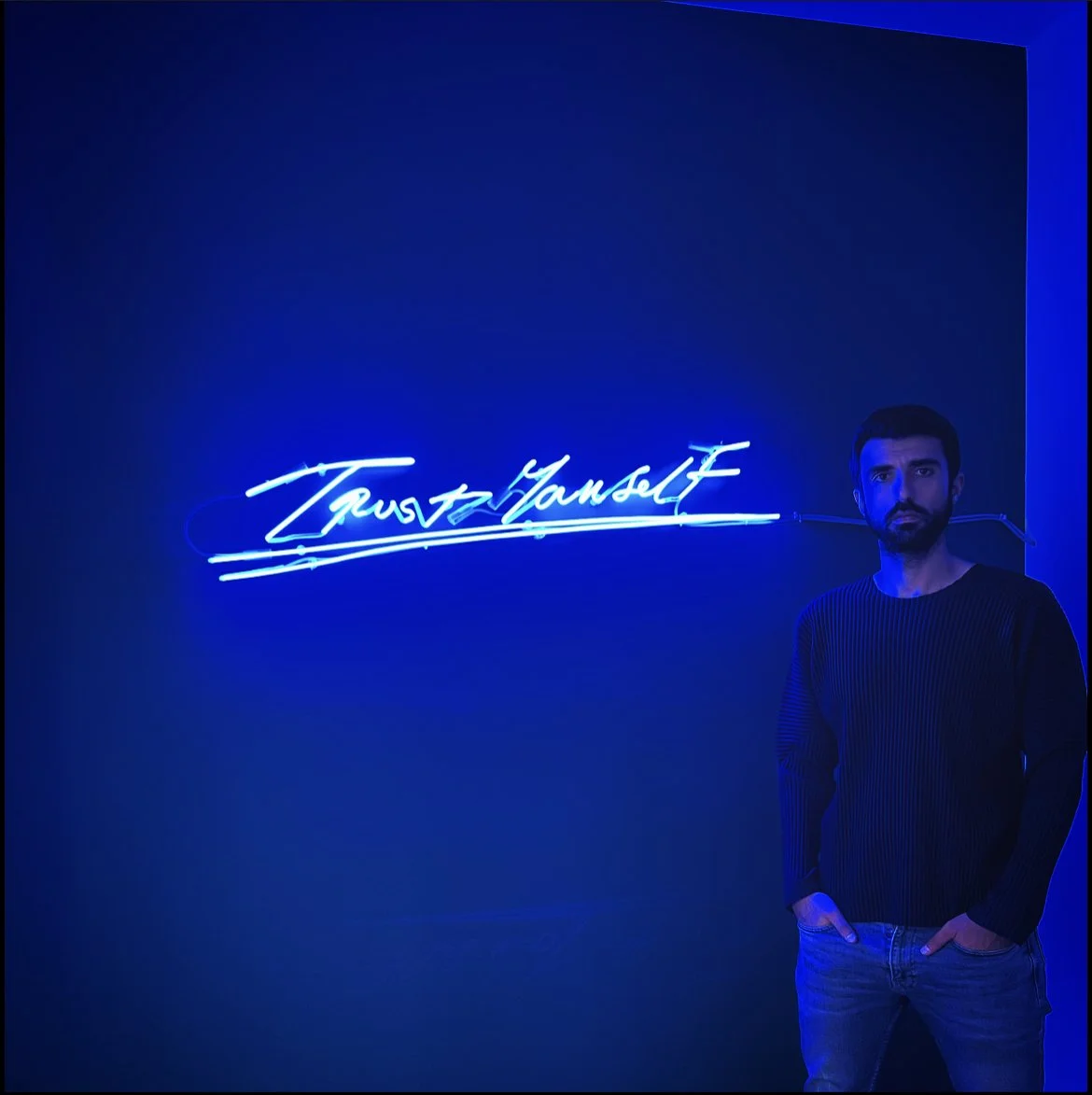
Raphaël with his collection by Tracey Emin
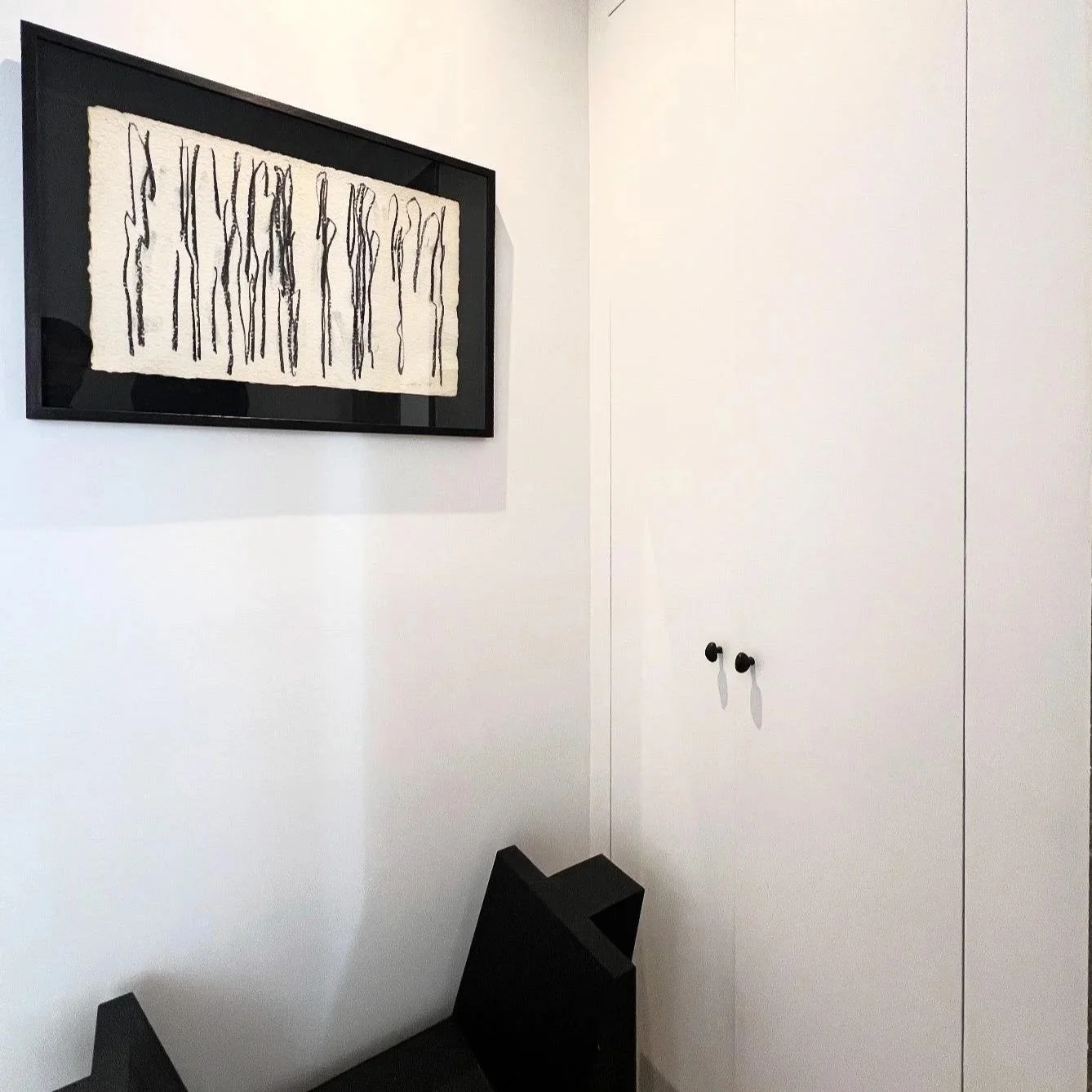
Original paper work by Lee U Fan
What’s the first spark you look for in an unknown artist—something you notice before anyone else does?
Consistency and conviction. Before thinking about market potential, I look at whether the artist is developing a coherent visual language over time. I pay close attention to technique, repetition, and evolution — not radical changes driven by trends. If the work feels like part of a long-term narrative rather than a momentary aesthetic, that’s usually the first real signal for me. It's also about picturing it on my walls and seeing if it matches with the furniture and surroundings. I also look at who is collecting him/her, who is showing this artist; If the work that is being offered to me represents clearly the artist's signature style. I also ask my close collectors friends what they think about it, since it's hard to be objective in art. I need to clearly insist that what was working well back in 2016 + is not relevant those days with the massive shift we are living;
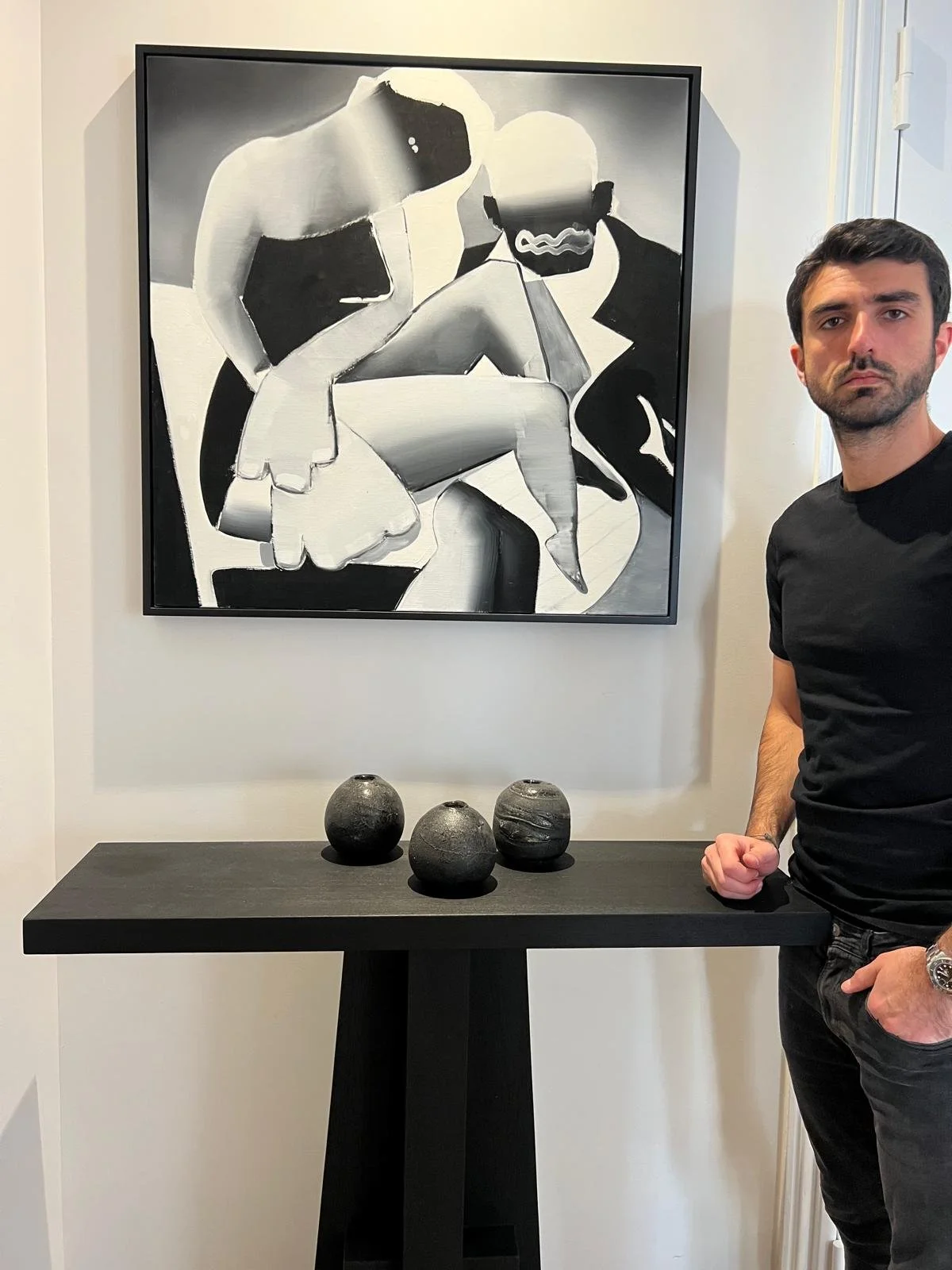
Raphaël with his collection by Tomoo gokita
You’ve said your collection is 90% figurative. In 2026, what does it take for a work in another style to break into your collection?
It has to feel livable. I’m very conscious of how I coexist with art in my home. Installations, for example, are intellectually interesting, but I can’t imagine living with them daily. For non-figurative works to enter my collection, they need to create emotional impact while maintaining spatial harmony — how they interact with light, furniture, and other works matters just as much as the concept itself. But in all honesty it's tough for me to add abstraction to my walls. The latest work I purchase that was a bit far from a classic figurative portrait was a Naotaka Hiro's painting that's a good mix between abstraction and some recognisable figurative patterns
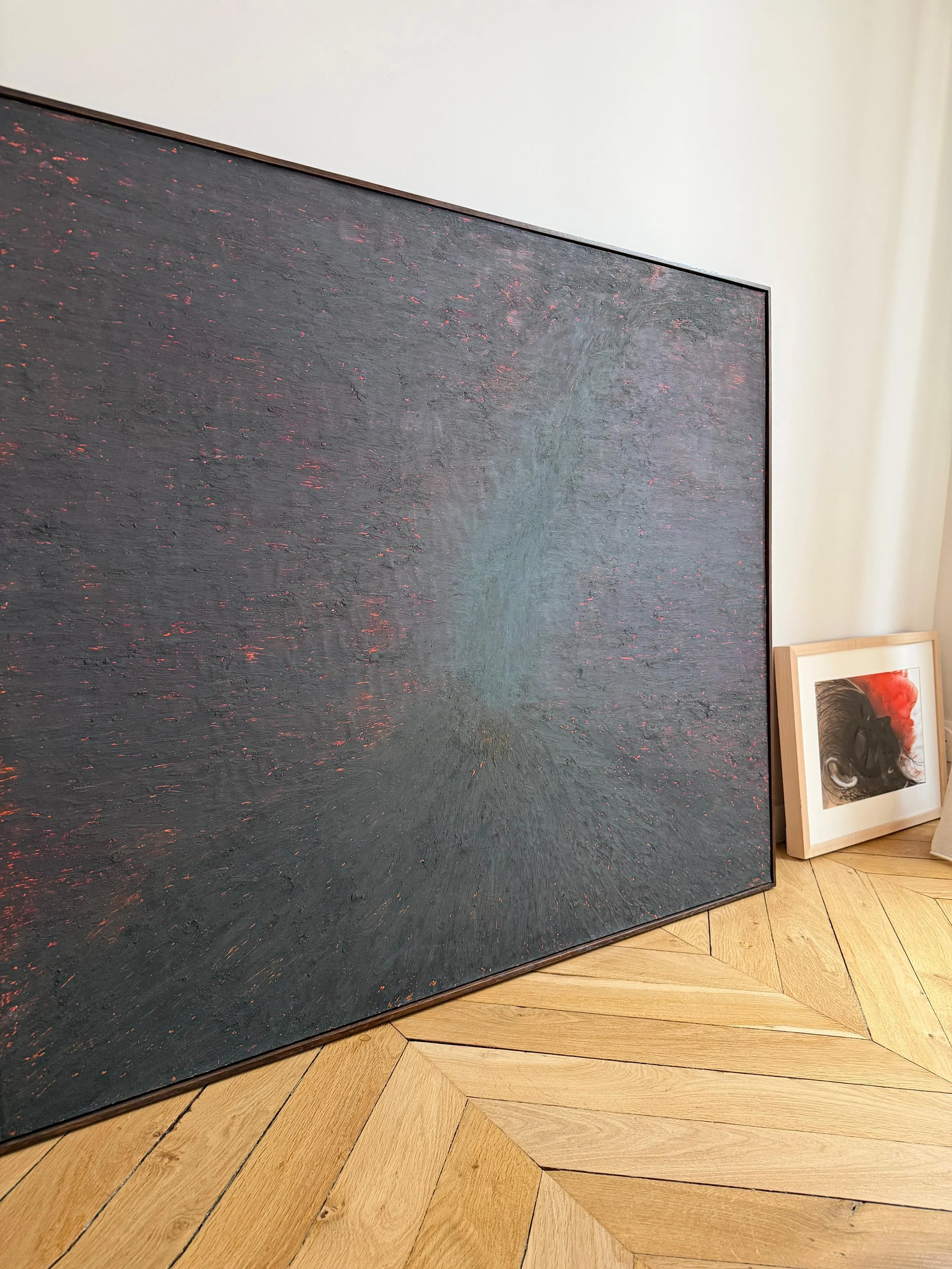
Artworks by Brice Guilbert and Huma Bhabha
You’re known for spotting talent on social media. What’s the one thing in an artist’s Instagram bio or feed that makes you instantly connect with them?
It’s less about the bio and more about the overall discipline of the feed. I’m drawn to artists who document their process honestly, who show repetition, research, and work ethic rather than just finished, polished images. When social media reflects a genuine practice — not a strategy — it becomes a powerful tool for connection.
But if I had to sum up, it's a mix of things. I'm extremely attached to the price tag, not about the number but about the number matching the career, the status, the secondary market, the time spent producing, the level of production, the representing galleries...
Spotting artists early on is not a thing anymore, too many people trying to find the next big thing, too many artists, too many works, too many shows, too many galleries, too high entry prices, too many "investors", too much of everything
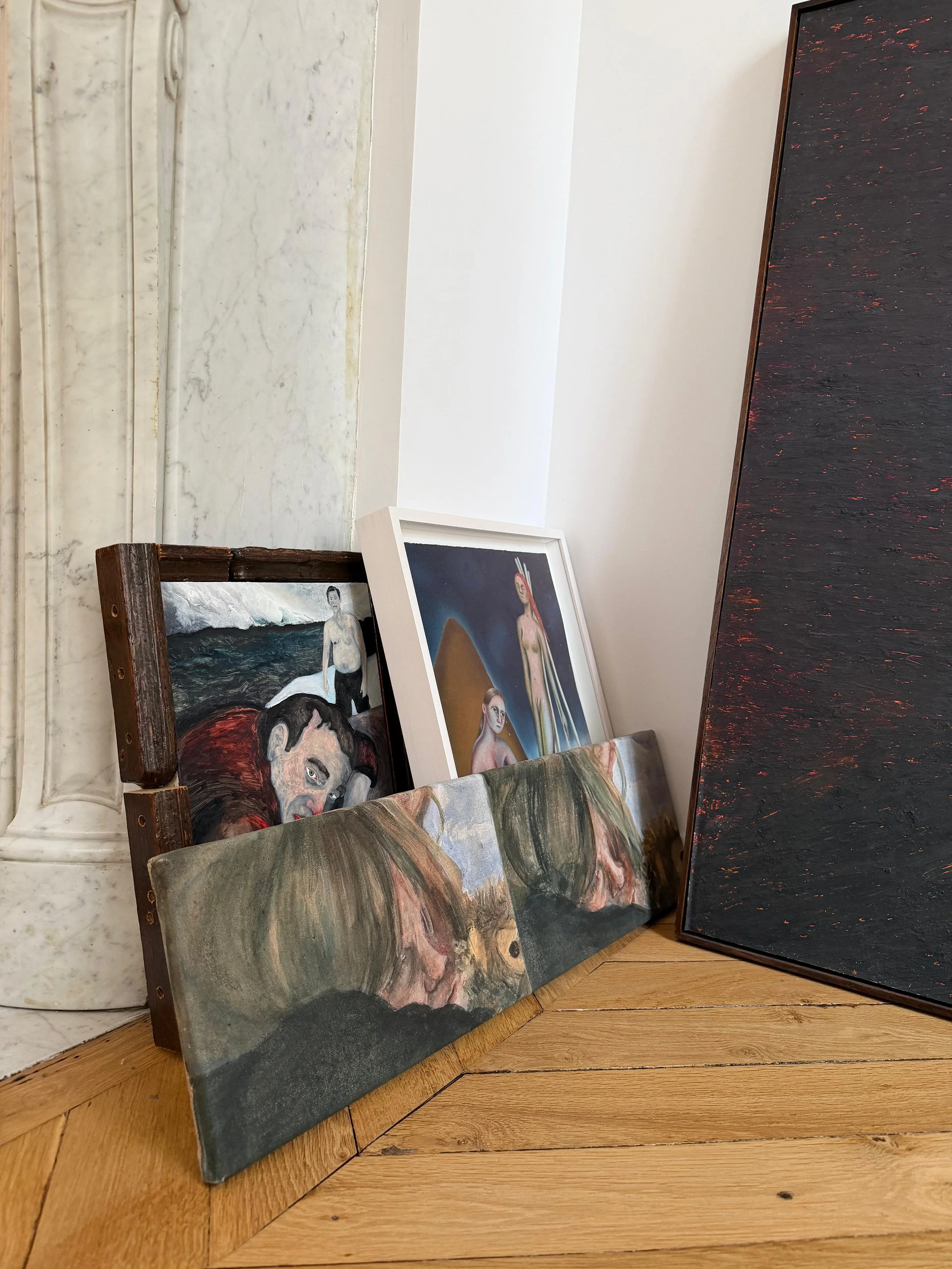
Artworks by Cécile Lempert, Nika Kutateladze, Sara Anstis
Your entryway features Tracey Emin’s neon “Trust Yourself”. In today’s volatile 2026 art market, how do you block out hype and stay true to your own eye?
I rely heavily on observation and time. The current market has made it clear that impulsive buying rarely holds up. I have changed my approach because we live and learn ! I follow artists for long periods, compare works, study their trajectories, and think deeply about where each piece will live in my space. Every time I bought purely with an “investment mindset,” it failed. The works that last are the ones bought with conviction and emotional clarity. In term of style I have also left the "kawaii" style and palette for something more subtle in terms of shades and images
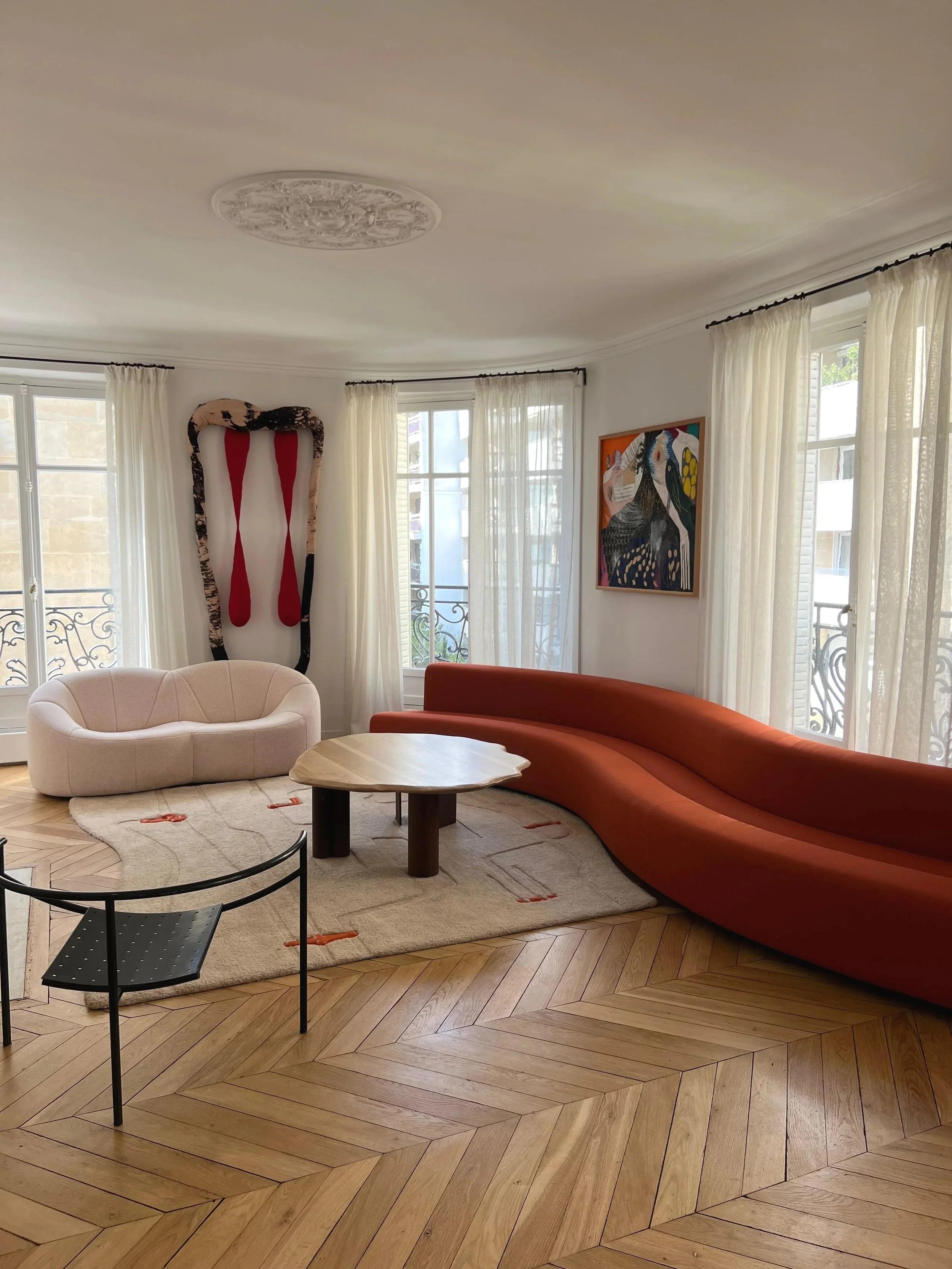
Artworks by Sterling Ruby, Naotaka Hiro; House designed by Sophie Dries; Furniture by Starck and Paulin
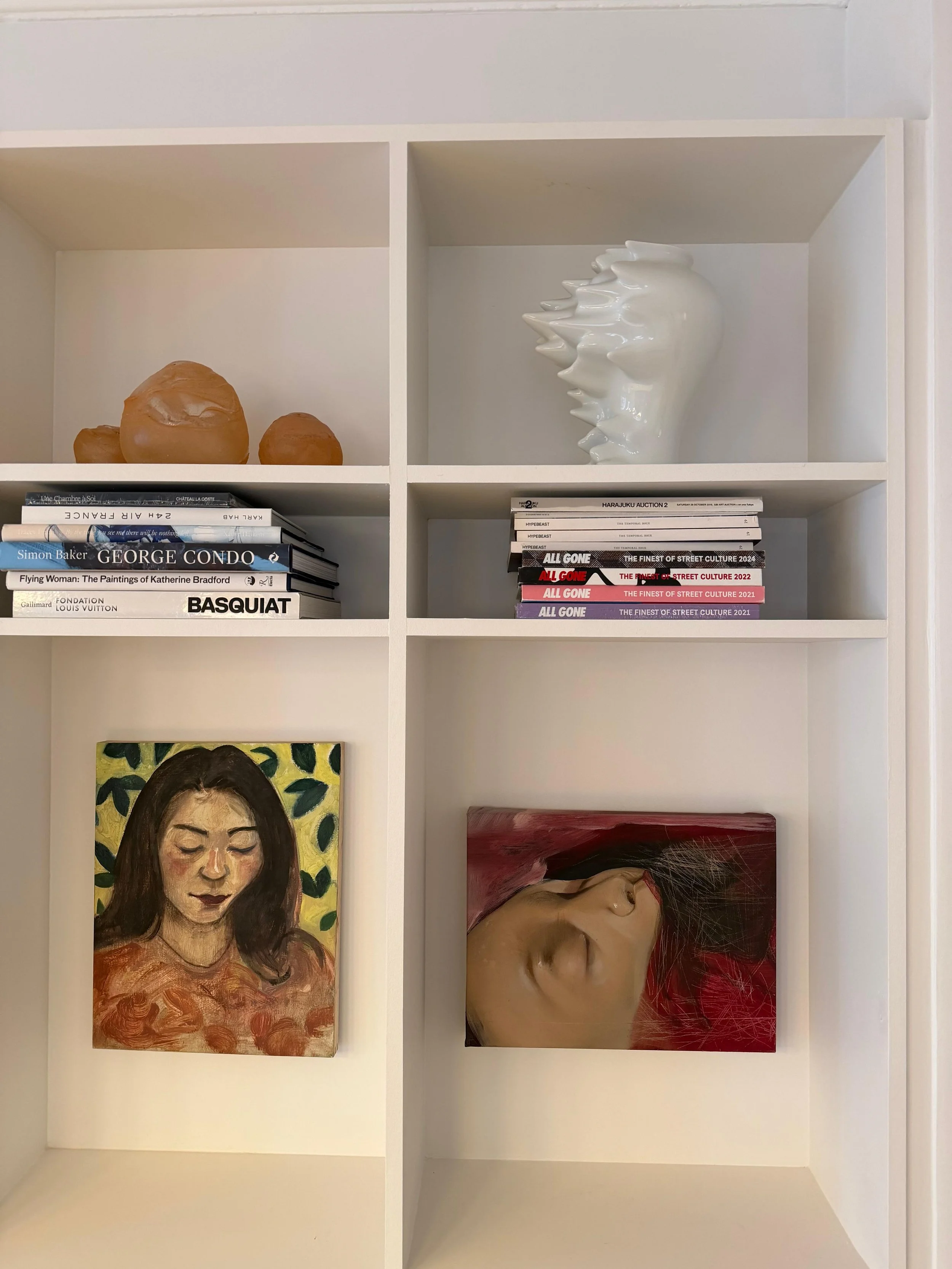
Artworks by Nathanaëlle Herbelin, Elsa Rouy
Following your 2025 home tour with Jerry Gagosian, where you offered a powerful introduction to your collection during Paris Art Week, what do you hope to explore this year?
My focus is on refinement. Less accumulation, more coherence. I want to empty storage, upgrade quality, and continue building a collection that feels balanced — between emerging and established artists, hype and timelessness, emotion and discipline. Ultimately, the goal is to live with fewer works, but ones that feel deeply aligned with who I am and how I live today. I also wish to do more fairs, more shows, more museums. 2025 was a transition year to me... let's see what 2026 has in room for us
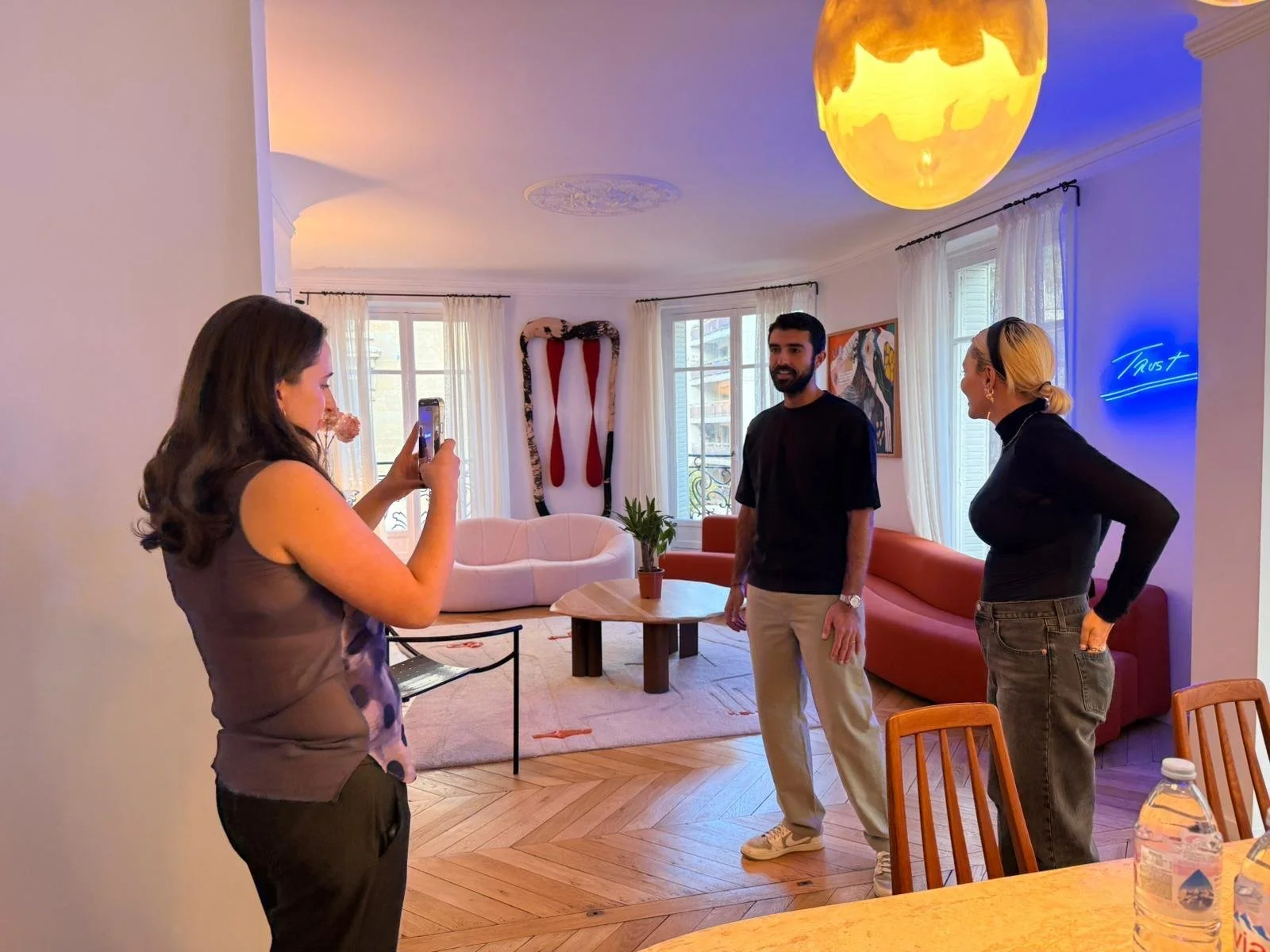
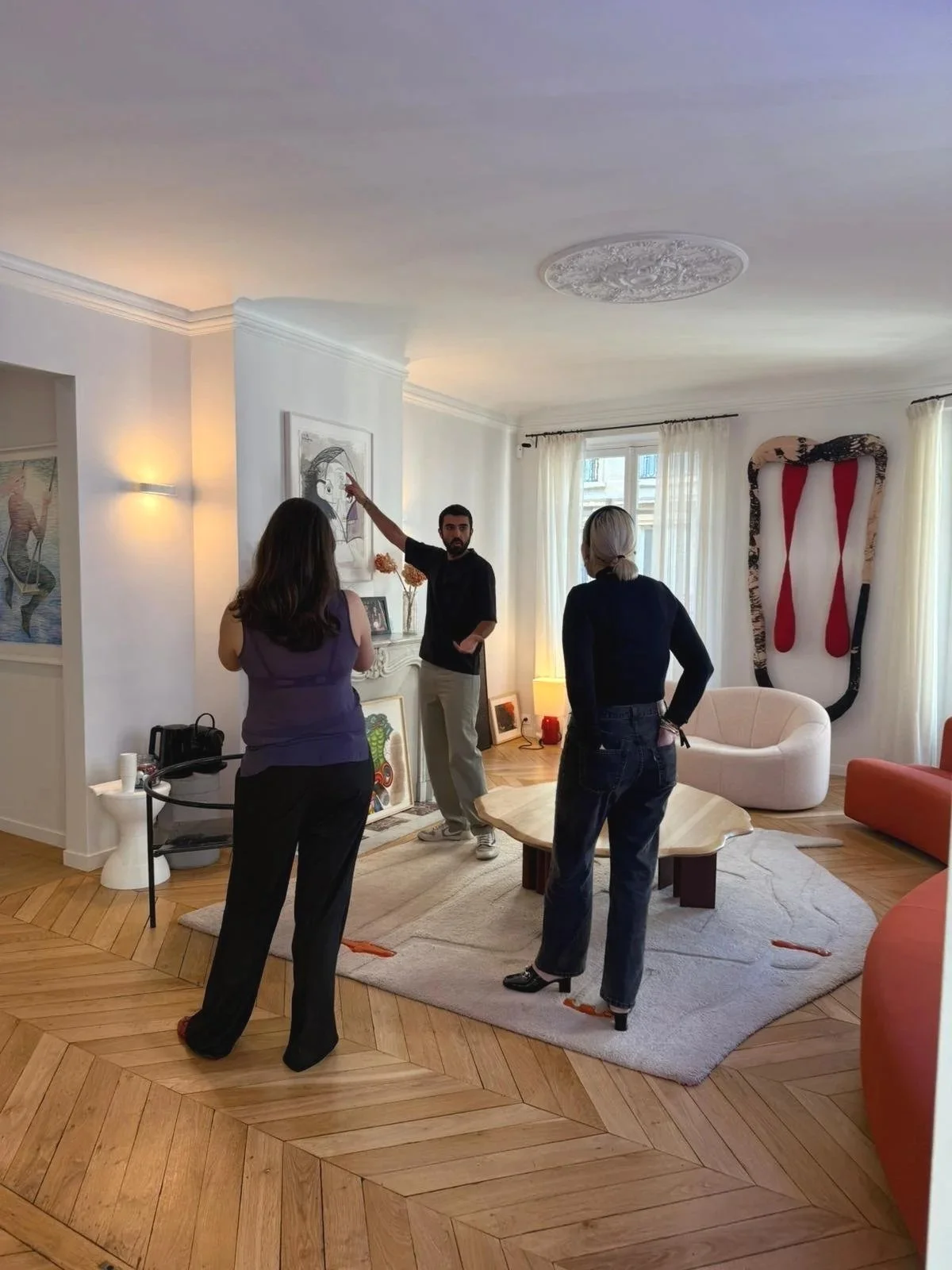
Art collection tour by Raphaël Isvy and Jerry Gagosian
As an Airbnb Connector and curator, you bridge private collections with the public. What unique art experience do you hope to create—or discover in future?
My job as a connector and curator of experiences for Airbnb lasted 2 years and has ended last December. It was probably the best feeling to tell passionate people that they could use the Airbnb platform to make money and promote their passion to people !
I have the true will of being involved in a physical location that combines art and experience, we need to REVISIT the way we show art to people, especially the non-aficionado art collectors; I think the era of white cubes and paintings has ended and we need to add fun. My love for both japanese and french culture, my knowledge in art, my past 2 years building Experiences are the perfect combination for a new approach... to be continued